

Persuasive marketing is a strategic approach that influences potential customers to take action by appealing to their emotions, needs, and desires rather than simply providing information. Unlike marketing that only educates, persuasive marketing actively guides people toward a specific decision—whether that’s making a purchase, signing up for a service, or engaging with your brand.
At its core, persuasive marketing answers the question: “Why should I care?” It connects your product or service to what your audience truly wants, creating a compelling reason to act now rather than later. This approach combines psychology, storytelling, and strategic messaging to move people from awareness to action.
Persuasive marketing works because people make decisions based on emotion first, then justify those decisions with logic. By understanding what motivates your audience—whether that’s solving a problem, achieving a goal, or fulfilling a desire—you can craft messages that resonate deeply and drive meaningful results.
Persuasive Marketing vs. Informational Marketing
While both persuasive and informational marketing have their place in your strategy, understanding the difference helps you deploy each more effectively.
Informational marketing focuses on educating your audience. It answers questions like “What is this product?” or “How does this service work?” Think product specifications, feature lists, and how-to guides. Informational content builds awareness and establishes expertise, but it stops short of actively encouraging a specific action.
Persuasive marketing goes beyond education to influence decision-making. It addresses “Why should I choose this?” and “What will this do for me?” Persuasive content highlights benefits over features, creates urgency, and removes barriers to action. It uses emotional appeals, social proof, and compelling calls-to-action.
Consider this example: An informational approach might say, “Our website design service includes responsive layouts and SEO optimization.” A persuasive approach would say, “Imagine a website that turns visitors into customers while you sleep—one that looks stunning on every device and ranks higher in search results.”
The most effective marketing strategies combine both approaches. Use informational content to attract and educate your audience, building trust. Then deploy persuasive techniques to convert that interest into action. For instance, you might write an educational guide about brand development that concludes with a compelling case study showing real results.
Desire-Based Advertising Explained
Desire-based advertising taps into what people want—not just what they need. This approach recognizes that purchase decisions are rarely purely rational. Instead, they’re driven by aspirations, emotions, and the desire for transformation.
Rather than focusing on product features, desire-based advertising paints a picture of the better future your customer will experience. It answers: “What will my life look like after I buy this?” This shift from features to outcomes is what makes desire-based advertising so effective.
The psychology behind this is straightforward: People don’t buy products; they buy better versions of themselves. They don’t purchase a gym membership for access to equipment—they buy it for the confidence they’ll feel and the person they’ll become.
To apply desire-based advertising, start by identifying what your customers truly want. For a business owner considering our digital marketing services, the desire isn’t really “a marketing plan.” It’s clarity about how to grow their business, confidence that their investment will pay off, and freedom from overwhelm.
Here’s how to shift from features to desires:
Feature-focused: “Our Brand Clarity Workshop includes stakeholder interviews and competitive analysis.”
Desire-focused: “Walk away from our Brand Clarity Workshop knowing exactly who you are as a brand, what makes you different, and how to communicate that clearly to the customers who matter most.”
When crafting desire-based messages, use vivid language that helps prospects visualize their future state. Phrases like “imagine,” “picture this,” and “what if you could” invite people into that vision. According to research from the Journal of Consumer Psychology, mental imagery significantly increases purchase intention.
Persuasive Marketing Examples (B2B and B2C)
Let’s examine how persuasive marketing works across different contexts.
B2C Persuasive Marketing Examples
Consumer brands excel at persuasive marketing by understanding emotional triggers. Apple doesn’t sell computers—they sell creativity and belonging. Nike doesn’t sell shoes—they sell achievement and determination.
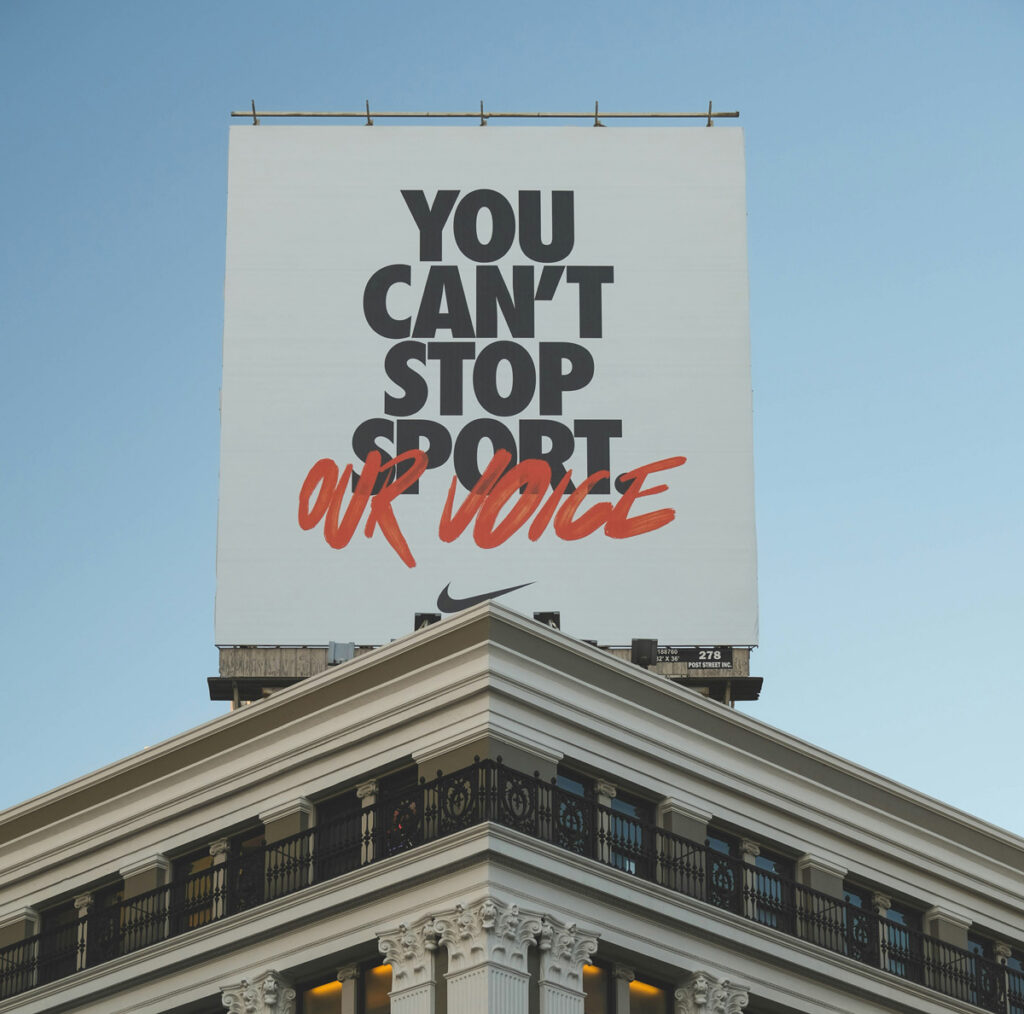
E-commerce sites use urgency and scarcity: “Only 3 left in stock” or “Sale ends tonight.” These tactics tap into fear of missing out (FOMO) and the psychological principle that we value things more when they’re scarce.
B2B Persuasive Marketing Examples
Business-to-business marketing requires a different approach, but persuasion remains crucial. B2B buyers make decisions based on ROI and risk mitigation—but these rational factors are still wrapped in emotional concerns about professional reputation and career advancement.
Our case studies demonstrate B2B persuasive marketing effectively. Rather than simply listing services provided, they tell transformation stories showing measurable results and long-term partnership value.
Software companies often use free trials as a persuasive technique—letting prospects experience the benefit firsthand removes skepticism and creates momentum toward purchase. According to HubSpot research, addressing objections upfront closes more deals.
LinkedIn content that shares authentic business challenges and solutions uses persuasion through relatability. When a business owner reads about someone facing the same struggle, that story becomes persuasive evidence that you understand their world.
How to Use Persuasion in Your Marketing Strategy
Implementing persuasive marketing means communicating genuine value in ways that resonate emotionally and logically.
Start With Why
Our philosophy at Shout Out Studio centers on starting with why—understanding the deeper purpose behind what you do. When you’re clear on your “why,” your persuasive messages naturally align with what matters to your audience.
Know Your Audience’s Desires
You can’t persuade people if you don’t understand what they want. What keeps them awake at night? What would make their life significantly better? What fears are holding them back? When you truly understand your customers’ motivations and pain points, persuasive messaging becomes easier to craft.
Use the Right Persuasive Techniques
Several proven psychological principles make marketing more persuasive:
Reciprocity: When you give something valuable, people feel inclined to give back. This is why offering free resources or valuable content works—it creates reciprocity that often leads to business relationships.
Authority: Demonstrating expertise builds trust. Share your knowledge through educational content, publish research, or showcase credentials. When people see you as an authority, they’re more likely to act on your recommendations.
Social Proof: People follow others’ lead, especially when uncertain. Testimonials, case studies, and reviews all provide social proof. Share specific results you’ve achieved for clients.
Scarcity: Limited availability or time-sensitive offers create urgency. However, use this technique authentically—false scarcity damages trust.
Consistency: People want their actions to align with their previous commitments. If someone engages with your educational content and identifies with your values, they’re more likely to choose your services.
Craft Benefit-Focused Messages
Features tell, benefits sell. Every feature delivers a benefit—make that connection explicit.
Instead of: “Our services include keyword research and technical optimization.”
Try: “Imagine potential customers finding you first when they search for what you offer—without paying for every click.”
The second version is more persuasive because it paints a picture of the outcome customers will experience.
Address Objections Proactively
Persuasive marketing removes barriers to action. Identify common objections—price concerns, implementation worries, skepticism about results—and address them before they become deal-breakers. According to Nielsen research on advertising effectiveness, emotional campaigns outperform rational ones significantly.
Create Compelling Calls-to-Action
A persuasive message without a clear next step wastes its potential. Your call-to-action should be specific, benefit-oriented, and low-friction.
Weak CTA: “Contact us”
Strong CTA: “Let’s talk about how brand clarity can transform your marketing—schedule a 30-minute consultation with no sales pressure”
Stay Authentic
The most important principle: persuasive marketing should reflect genuine value. Manipulation and persuasion differ in intent. Manipulation prioritizes your goals over the customer’s best interest. Persuasion aligns your goals with theirs, showing them how your solution genuinely benefits them.
Ready to Make Your Marketing More Persuasive?
Persuasive marketing isn’t about tricks—it’s about connecting authentically with what matters most to your audience and communicating your value in ways that resonate both emotionally and logically.
At Shout Out Studio, we help businesses discover their “why” and translate it into marketing that moves people to action. Let’s talk about how purpose-driven, persuasive marketing can help your business grow.